WellUnda Patient Prep
An AI care companion concept that helps patients prepare for appointments, follow the conversation, and act on what comes next, without taking the clinician's place.
- Context
- Self-initiated healthcare concept · Mobile
- Role
- Product designer: strategy, brand, UX, UI, prototyping, content design
- Timeline
- 2026 concept - 1 month
The problem
Patients can leave appointments with unanswered questions and half-remembered instructions. Helpful health data, from blood pressure logs to wearable trends and medication history, live in separate places. WellUnda explores how to bridge the moments before, during, and after a visit while keeping clinical judgment with the doctor.
The patient behind the flow
I designed for Sarah, a returning patient managing high blood pressure with Dr. Jessica Jones. Her recent blood pressure, sleep, and medication history give WellUnda useful context, but also create a responsibility to use it carefully. Rather than start with onboarding, I focused on what a product that already knows her should do at her next visit.
the patient journey
A closer look
Phase 1
Before the visit
Sarah sees her upcoming appointment and health context, then chooses which suggested questions to bring into the room.
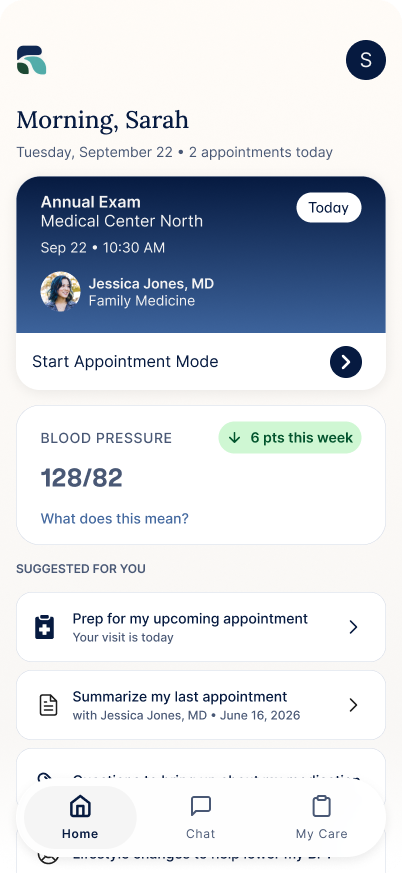
Home
A timely appointment card and blood-pressure trend surface the right context without overwhelming the day.
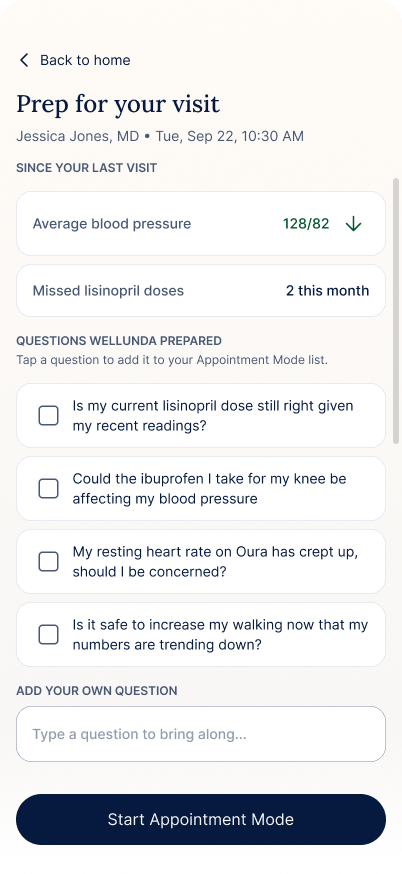
Prep for your visit
Recent readings and editable prepared questions make the appointment feel more manageable.
two ways to connect
AI Chat & Voice
Patients can choose the input mode that fits the moment while keeping guidance visible, grounded, and easy to revisit.
AI Chat
Chat turns health context into practical preparation, keeps longer guidance readable, and suggests useful follow-up questions without replacing the care team.
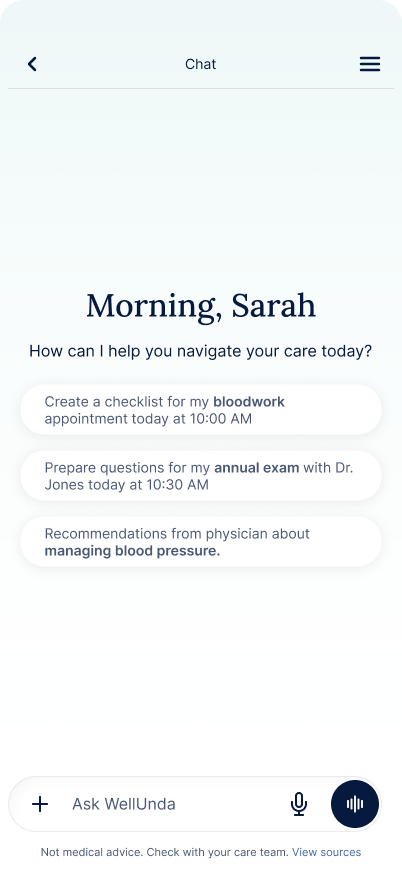
A personal starting point
Suggestions begin with Sarah's appointments and care rather than generic prompts.
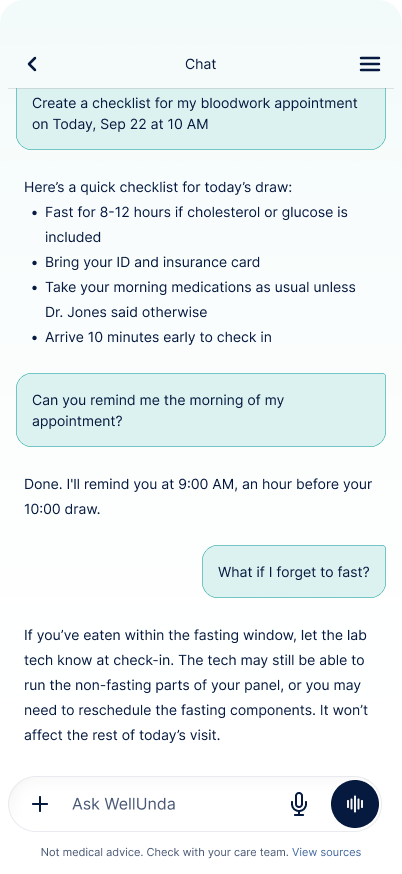
A complete conversation
Preparation, reminders, and follow-up guidance stay together in one readable thread.
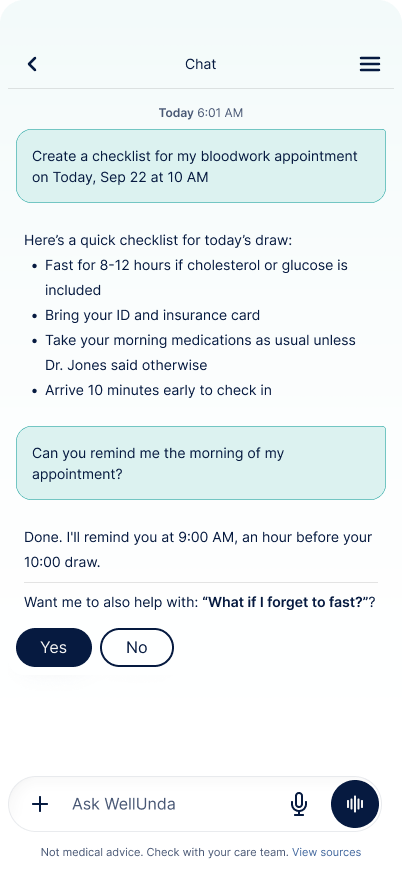
Helpful next questions
Contextual suggestions help Sarah continue without needing to know exactly what to ask next.
Voice
Voice gives Sarah a hands-free option while preserving visible responses and controls, so switching modes does not mean losing context.

Listening controls
Caption and microphone controls remain visible and easy to change during a conversation.
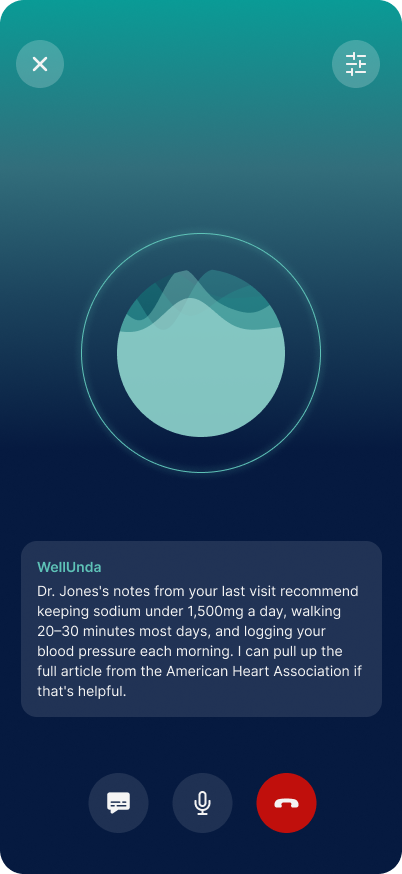
Visible response
The assistant's spoken answer also appears on screen for clarity and review.
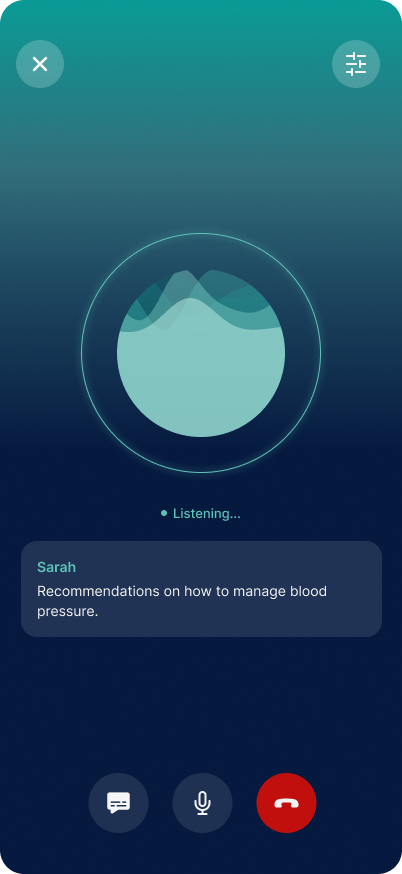
Live captions
Captions make the conversation visible while Sarah speaks and listens.
Designing beyond the happy path
The supporting states receive the same attention as the main journey. Thinking states say what the assistant is checking, longer answers stay easy to read, and errors remain distinct from advice with a clear retry path. Spoken conversations become a readable chat record, and captions appear by default in voice mode so changing input modes never means losing context.
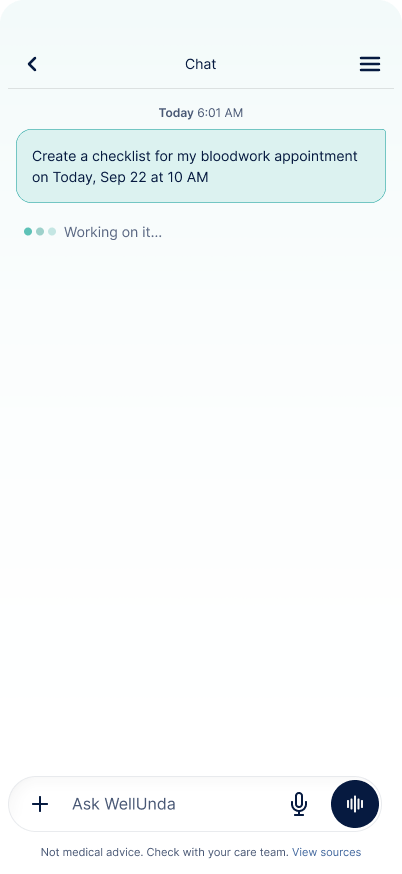
Thinking
A clear status reassures Sarah that the request is in progress.
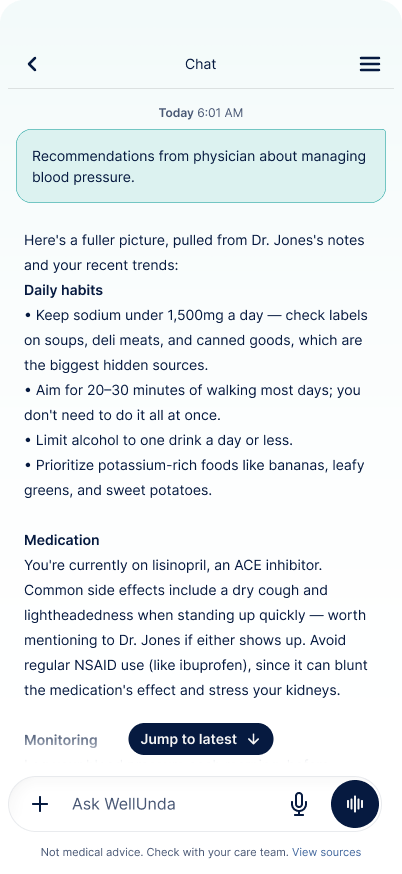
Long answer
Extended guidance stays readable, with a way to jump to the latest message.
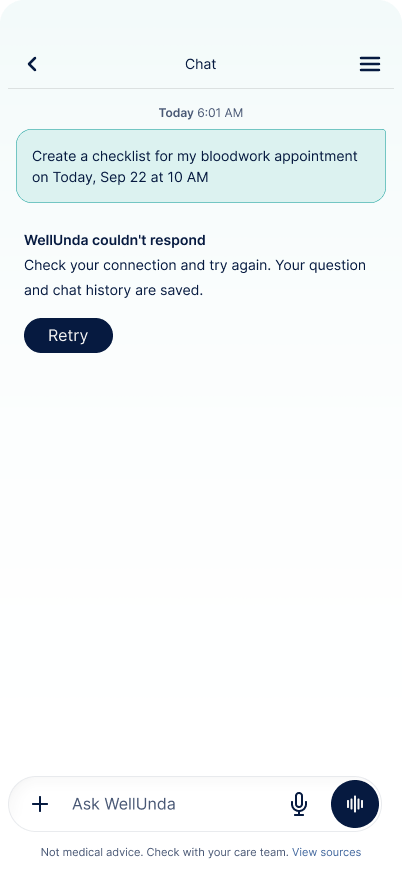
Error recovery
The failure is labeled as a system error and offers a retry without discarding the question.
Prepare, don't prescribe
The central design decision was to help Sarah have a better conversation with her doctor, not to make medical decisions for her. Prompts become questions to ask Dr. Jones, explanations point to vetted sources, and clinical guidance is attributed to the clinician. Voice is one way to use the assistant alongside chat and dictation, not the whole product identity.
- Show the source behind explanations
- Ask for consent before recording
- Make captions, readable language, and multiple input modes part of the core experience
Trust is visible in the interface
Trust is vital for a healthcare app, and it stayed at the forefront of every strategy and design decision. The proposed Appointment Mode asks for consent before capture and explains that generated transcripts and translations may contain errors. Content rules steer away from directive language: instead of telling Sarah what to do with medication, WellUnda suggests what to discuss with Dr. Jones. A real launch would need clinical, privacy, and regulatory review.
How I'd measure success
Because WellUnda is a concept, these are proposed measures, not results.
North Star: Confident Care Actions. The percentage of users who take a meaningful healthcare action after using WellUnda, such as preparing a question, asking their provider a question, understanding a recommendation, or completing a follow-up.
1. Prepare
Appointment preparation rate
- Method: Product analytics tracking appointment prep, question generation, and saved questions
2. Understand
Improvement in comprehension
- Method: Usability testing with before-and-after comprehension questions
3. Participate
Percentage of suggested questions users ask their provider
- Method: Track question interactions in Appointment Mode, supplemented by post-appointment surveys
4. Act
Follow-up completion rate
- Method: Track care-plan actions and follow-ups, with optional user check-ins or surveys
Success looks like: users leave healthcare interactions feeling more prepared, more informed, and confident about their next step.
Reflection & next steps
My financial-services background shaped how I approached trust in another regulated setting: consent, attribution, and visible sourcing became part of the experience rather than fine print. The next step is testing with patients, caregivers, clinicians, and screen-reader users before making any claims about impact.
Concept deliverables
- Brand identity and mobile experience concept
- Before, during, and after visit journey with chat and voice modes
- Consent-aware copy, accessibility choices, and error states designed for further validation